Frequency: f = 1 ÷ T
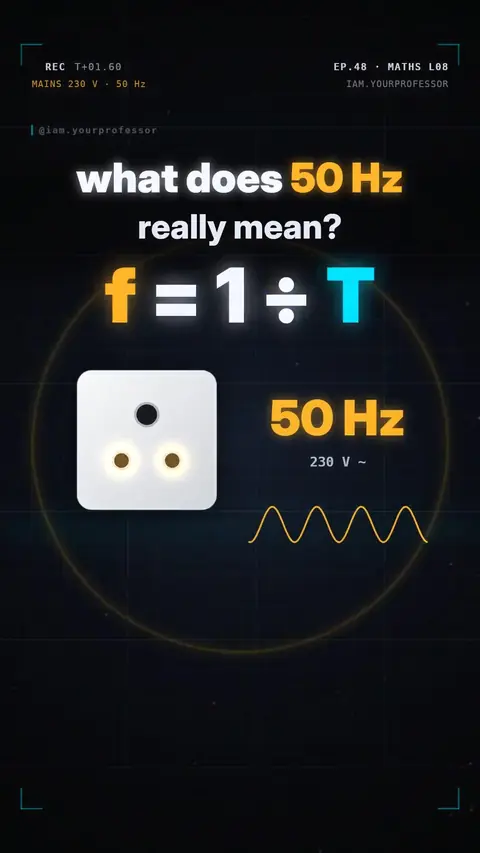
Turn a period into a frequency and back (50 Hz mains = 20 ms, Uno PWM 490 Hz ≈ 2 ms, a 16 MHz clock tick = 62.5 ns).
Your socket says 50 Hz. What does that actually MEAN? 〰️
1️⃣ PERIOD → FREQUENCY: one full wave of mains takes T = 20 ms (0.02 s). 50 of them fit in one second. So f = 1 ÷ T = 1 ÷ 0.02 = 50 Hz. Hertz just means "per second".
2️⃣ FLIP IT, T = 1 ÷ f: Arduino PWM on pin 9 runs at about 490 Hz → one pulse every ≈ 2.04 ms. The Uno's 16 MHz clock → one tick every 62.5 nanoseconds (62.5 billionths of a second)!
3️⃣ IN YOUR BODY: 72 heartbeats a minute = 72 ÷ 60 = 1.2 Hz → one beat every ≈ 0.83 s. Mains is about 40× faster than your heart.
📌 f = 1 ÷ T and T = 1 ÷ f. Fast means short, slow means long.
f = 1 ÷ TRead the voiceover (transcript)
- What does fifty hertz really mean?
- One full wave takes twenty milliseconds. Fifty of them fit in one second: fifty hertz!
- Flip it! Four ninety hertz PWM: a pulse every two milliseconds. A sixteen megahertz clock: sixty-two nanoseconds!
- Your heartbeat? About one point two hertz!
- Fast means short. Slow means long!
- Next: RMS voltage! Follow for lesson nine!
Related lessons
Get new lessons + early access to the full course
One email when new lessons drop. No spam, unsubscribe any time.
✓ You're on the list. Check your inbox to confirm.
By joining you agree to the privacy policy.